
|
|
#61
 04.05.2016, 08:44
|
||||
|
||||
 Game Six: The Slash
http://www.1972summitseries.com/game6recap.html
 After the Soviet come-from-behind victory in Game 5 to take a commanding 3-1-1 series lead, you would have expected Team Canada to be demoralized and dejected and Russia would have gone for the kill. Things didn't exactly unfold that way, however. Canada kept positive and felt that they could still win, while Russia, admittedly in hindsight, became overconfident and ultimately allowed the Canadians back into the series. Canada had felt like they were finally coming into form. Remember this was the beginning of the professionals' seasons, and unlike the Soviets who trained almost year round, the Canadians were just coming into game shape. And remember also that while the Russians knew all about the Canadian game, the Canadian knowledge of the Soviet strategy was nonexistent entering the series. Now, after five games, Canada felt they were prepared to play the Soviets. The first period wasn't dominated by Esposito or Mahovlich, or by Yakushev or Kharlamov, but rather by two guys named Kompalla and Bata. They were the two referees from West Germany that were so brutally bad that it was charged that they were blatantly biased against the Canadian players. Canadian players were repeatedly sent to the penalty box for questionable and phantom penalties. Phantom offsides were being called as well. Somehow the Soviets were rarely being called for penalties, though. You can chalk it up to cultural differences in the differing styles of hockey. By the end of the game, the penalty minutes were 31 for Canada, just four for Russia. Fortunately Team Canada's penalty killing was in top shape for this game, as the Soviets possessed a lethal power play. After a scoreless first period, a flurry of scoring filled the second stanza. The Soviets opened the scoring as a low shot from the blue line by Yuri Liapkin. The Canadians would not deflate after falling behind yet again. Instead they responded with several strong minutes of sustained attacks. The pressure paid off when they shocked the Soviets with three goals in a short span of just 1 minute and 23 seconds. Dennis Hull flipped a Rod Gilbert rebound over a fallen Vladislav Tretiak for Canada's first goal at 5:13. Then at 6:31 Red Berenson was able to center the puck to an open Yvan Cournoyer. The Roadrunner buried the shot from the slot. And then just 15 seconds later, Paul Henderson scored what proved to be the game winning goal. He intercepted a pass by a Soviet defender and wired a slapshot past the unprepared Tretiak. One penalty that was issued to Canada was definitely well deserved. Bobby Clarke, at the encouragement of assistant coach John Ferguson, controversially attacked the Soviet's flashiest player. Clarke cracked the ankle of Valeri Kharlamov. Kharlamov didn't lose his footing and actually turned around to say a word or two to Clarke - this made the play seem less harmful than it truly was. Kharlamov would miss the next game and was ineffective in the final game. Team Canada's penalty killing played a huge roll in the outcome. The Soviets awesome powerplay was held to just one goal. That goal came late in the game as Alexander Yakushev made it 3-2 with a little over 2 minutes left. 1972 Summit Series.com: Game Six Box Score Sept. 24, 1972 - Canada 3 - USSR 2 First Period No Scoring Penalties: Bergman (tripping) 10:21, P. Esposito (double minor, charging) 13:11 Second Period 1-USSR Liapkin (Yakushev, Shadrin) 1:12 2-Canada Hull (Gilbert) 5:13 3-Canada Cournoyer (Berenson) 6:21 4-Canada Henderson 6:36 5-USSR Yakushev (Shadrin, Liapkin) 17:11 (PP) Penalties: Ragulin (interference) 2:09, Lapointe (roughing) 8:29, Vasiliev (roughing) 8:29, Clarke (minor slashing, and 10 minute misconduct) 10:12, D Hull (slashing) 17:02, P. Esposito (major, high-sticking) 17:46, Team Canada bench minor (served by Cournoyer) 17:46 Third Period No Scoring Penalties: Ellis (holding) 17:39 Shots on Goal: Canada 7 8 7 - 22 Soviet Union 12 8 9 - 29 Goalies: Tretiak (19/22) 60 minutes, 3 goals against Dryden (27/29) 60 minutes, 2 goals against Game MVPs: USSR - Lutchenko - Yakushev Canada - Dryden - Bergman Attendance 15,000 (Moscow) Players on ice: Canada: Bergman, Stapleton, Park, Ellis, P. Esposito, Gilbert, D. Hull, Cournoyer, Berenson, White, Ratelle, Henderson, P. Mahovlich, Parise, Savard, Lapointe, Clarke Soviet Union: Lutchenko, Ragulin, Vasiliev, Tsygankov, Maltsev, Mikhailov, Shatalov, Yakushev, Petrov, Kharlamov, Vikulov, Shadrin, Anisin, Lebedev, Bodunov, Liapkin, Volchkov Photo Feature  Perhaps the most controversial moment of the series came in game six when he deliberately attacked Valery Kharlamov's ankle by wielding his stick. It was perhaps never so controversial as during the 30th anniversary celebrations. (Photo courtesy of CNNSI.com).  Buy the DVD! Canada's Team of the Century cover The Soviets were actually unlucky to not have tied the game. Late in the second period, some people felt that the Soviets had scored a goal, but the officials never noticed and the Soviets never protested. Valeri Kharlamov was able to flip a light shot over Ken Dryden, but the puck seemed to be stopped by the old-style netting that hung down from the crossbar. The idea of the netting was to keep the puck in the net once it zoomed in there. But in this case, it slowed the puck down, and Dryden was able to reach back and glove it. The call by announcers was that the puck hit the goalpost. 
|
|
#62
05.05.2016, 10:59
|
||||
|
||||
|
Game Seven: Canada Forces Game 8
http://www.1972summitseries.com/game7recap.html
Game 6 was Canada's first victory since Game 2. This sparked an outpouring of excitement back home, as some 50,000 rejuvenated fans sent telegrams and best wishes to the team. This helped motivate Team Canada, who were all but alone in the powerful, undemocratic country. Somehow the victory in Game 6 provided a great sense of confidence in the team. No matter how unlikely it may have seemed to an outsider, the team truly believed that they would win Game 7, and then Game 8. Russia would have to play the game without their flashiest superstar in Valeri Kharlamov, who was sitting out this game with a badly bruised ankle thanks to the dastardly Bobby Clarke in Game 6. At the urging of Team Canada co-coach John Ferguson, Clarke wielded his stick in axe like fashion to chop down the flashy star. Clarke would later admit he had every intention of breaking the ankle he was aiming for. Canada got off to a strong start in what might have been the best played game of the series. At just 4:09 of the game Phil Esposito opened the scoring thanks to a Ron Ellis centering pass. Six minutes later the Soviets tied it up. Alexander Yakushev took advantage of a stumbling Brad Park to break in alone on Tony Esposito, slipping the puck between the goaltender's pads. Park was victimized again for the 2-1 goal late in the period. While killing a penalty the puck bounced off of Park's skate directly to Vladimir Petrov's stick. Petrov easily converted. Before the period was over Phil Esposito somehow managed to get the puck through a maze of players in front of the Soviet net and past the screened Vladislav Tretiak. Goaltending was the story of the second period, particularly by Tony Esposito. Russia outshot Canada 13-7 in the frame, but no one was able to beat either puck stopper. The tie was finally broken early in the third period when Rod Gilbert emerged from behind the net to stuff a backhand shot behind Tretiak. The lead would be short lived as Yakushev scored his second of the game to tie the score at 3. Those Soviet teams were so amazing. Whenever the opposition thought they finally got a break against them, the Russians would seemingly always respond quickly and emphatically. After the tying goal Russia seemed to put their offensive attack into a higher gear, but Tony Esposito was up to the task. He made half a dozen spectacular saves. However the Soviet momentum soon subsided, and the teams played tight, defensive hockey for the rest of the game. Neither team wanted to make a mistake. At 16:26 of that final period, one of the most disturbing scenes in hockey history occurred. Soviet captain Boris Mikhailov and Canadian defenseman Gary Bergman collided along the side boards and began to push and shove. That's when the overmatched Mikhailov committed hockey's cardinal sin and used his skates as a weapon. He kicked at Bergman's shins repeatedly. Bergman, who was cut but not seriously injured on the play, responded by ramming Mikhailov's head into the chicken wire that was used in Luzhniki Ice Palace instead of Plexiglas. 1972 Summit Series.com Game Seven Box Score Sept. 26, 1972 - Canada 4 - USSR 3 First Period 1-Canada P. Esposito (Ellis, Park) 4:09 2-USSR Yakushev (Shadrin, Liapkin) 10:17 3-USSR Petrov (Vikulov, Tsygankov) 16:27 (PP) 4-Canada P. Esposito (Parise, Savard) 17:34 Penalties: Mikhailov (tripping) 2:00, P. Mahovlich (roughing) 5:16, Mishakov (holding) 5:16, Mishakov (holding) 11:09, P. Esposito (cross checking) 12:39, White (interference) 15:45 Second Period No Scoring Penalties: Gilbert (hooking) 00:59, Parise (slashing) 6:04, Anisin (hooking) 6:11, P. Esposito (roughing) 12:44, Kuzkin (roughing) 12:44, Parise (roughing) 15:14, Kuzkin (roughing) 15:14, Stapleton (holding) 14:24 Third Period 5-Canada Gilbert (Ratelle, Hull) 2:13 6-USSR Yakushev (Maltsev, Lutchenko) 5:15 (PP) 7-Canada Henderson (Savard) 17:54 Penalties: Bergman (holding) 3:26, Gilbert (charging) 7:25, Bergman (major, roughing) 16:26, Mikhailov (major, roughing) 16:26 Shots on goal: Canada 9 7 9 - 25 Soviet Union 6 13 12 - 31 Goalies: Tretiak (21/25) 60 minutes, 4 goals against T. Esposito (28/31) 60 minutes, 3 goals against Game MVPs: USSR - Mikhailov - Yakushev Canada - P. Esposito - White Attendance 15,000 (Moscow) Players on ice: Canada: Bergman, Stapleton, Park, Ellis, P. Esposito, Gilbert, Goldsworthy, D. Hull, Cournoyer, White, Ratelle, Henderson, P. Mahovlich, Parise, Savard, Lapointe, Clarke Soviet Union: Gusev, Lutchenko, Kuzkin, Ragulin, Vasiliev, Tsygankov, Blinov, Maltsev, Mishakov, Mikhailov, Yakushev, Petrov, Vikulov, Shadrin, Anisin, Liapkin, Volchkov Photo Feature  Paul Henderson scored the tournament's most exciting goal in game 7 to ensure Canada would have a chance to pull out a series victory in a decisive game 8. It was just a hint of what was to come. 1972 Summit Series Games Buy the DVD! Canada's Team of the Century cover The melee could have turned into an all-out brawl, as both team benches emptied. Fortunately the two sides were out there to break up the fight and restore calm. A brawl would have been a major disaster for the participants and the sport in general. The players settled down but it was Canada who seemed to find an edge of momentum once play resumed. And that enabled Paul Henderson to score his second consecutive game-winning goal. With less than three minutes left to play, Henderson was sprung lose thanks to a nice pass from Serge Savard. Henderson was in alone on two Soviet defenseman -- normally an impossible scoring chance. He crossed so that the two defensemen were forced to cross positions as well, resulting in a moment of confusion between the two comrades. Henderson slid the puck through the defenseman's legs and went around. Instead of playing the man, defenseman Evgeny Tsygankov tried to play the puck. He failed to stop the puck and Henderson was in alone. He scored just under the crossbar while falling down as the defenders tackled him. Henderson seemed as surprised as anyone that he was able to score that goal. Henderson was a role player, not a superstar, yet that was a superstar's goal. It is one of the prettiest goals ever caught on film. Yet it was just a hint of what was to come for Canada's newest hero. "I sat there after the game and said: 'I will never score a bigger goal than this in my life and I can die a happy man,'" Henderson remembered 30 years later. Of course he would be even happier a couple of nights later. http://www.youtube.com/watch?v=WCejw...eature=related
|
|
#63
06.05.2016, 08:40
|
||||
|
||||
|
Game Eight: Henderson Has Scored For Canada!
http://www.1972summitseries.com/game8recap.html
Momentum was clearly on the Canadian side heading into decisive Game 8, yet they still had to win the game in order to claim victory in the series. A tie game would result in a tied series, but the Russians would have claimed victory because they had scored one more goal. That didn't sit well with the Canadians, so Team 50 set out to make sure that would not happen. It became apparent early on that the Russian bureaucrats were going to do everything they could to see that the Russian hockey would be victorious, including cheating. And cheating is exactly what they did. On the evening before the concluding game, the Russians switched officials. It was agreed upon earlier that Swedish referee Uve Dahlberg and Czechoslovakian referee Rudy Bata would officiate the final game, but Dahlberg had suspiciously fallen ill -- food poisoning was the story. The Russians said that West German officials Josef Kompalla and Franz Baader, who both horrendously officiated Game 6, would have to officiate the final game. But Canada wanted no part of that. Those two, Kompalla in particular, proved to be brutally incompetent. The power-play advantages given to the Soviets so outrageously outnumbered the advantages given to Canada in Game 6 that one had to wonder if they were deliberately trying to throw the game. Canada wanted no part of such an arrangement. Alan Eagleson had threatened to leave without ever playing Game 8, and, at least on the night prior to the big game, he had the support of the players on that issue. By doing so the Soviets would lose out on thousands of dollars of television money. An agreement was made just hours before game time. The Canadians would stay and play Game 8 and each team would choose one official each. Canada chose Bata, while Russia chose Kompalla. CBC Radio Coverage Over Referee Dispute Prior to Game Eight - CBC Radio (5:02) The Soviet's actions may have done more harm to their cause than good. Team Canada was able to redirect some of the pressure facing them because of this distraction. Yet they remained not only focussed on the hockey game itself, but were more intense and angrier than ever before. Canada coupled that intensity with the momentum and confidence they had gained in the previous two victories. Team Canada's fears about referee Kompalla were quickly realized. Just 2:25 into the game Bill White was given a questionable penalty, followed by another to Peter Mahovlich just 36 seconds later. The game was just three minutes old and already Canada was having to kill off a two-man disadvantage. Thirty-three seconds later Alexander Yakushev opened the scoring. 1972 Summit Series.com Game Eight Box Score Sept. 28, 1972 - Canada 6 - USSR 5 First Period 1-USSR Yakushev (Liapkin, Maltsev) 3:34 (PP) 2-Canada P. Esposito (Park) 6:45 (PP) 3-USSR Lutchenko (Kharlamov) 13:10 (PP) 4-Canada Park (Ratelle, Hull) 16:59 Penalties: White (holding) 2:25, P. Mahovlich (holding) 3:01, Petrov (hooking) 3:44, Parise (minor, interference, 10 minute misconduct, game misconduct) 4:10, Tsygankov (interference) 6:28, Ellis (interference) 9;27, Petrov (interference) 9:46, Cournoyer (interference) 12:51 Second Period 5-USSR Shadrin 0:21 6-Canada White (Gilbert, Ratelle) 10:32 7-USSR Yakushev 11:43 8-USSR Vasiliev 16:44 (PP) Penalties: Stapleton (cross checking) 14:58, Kuzkin (elbowing) 18:06 Third Period 9-Canada P. Esposito (P. Mahovlich) 2:27 10-Canada Cournoyer (P. Esposito, Park) 11-Canada Henderson (P. Esposito) 19:26 Penalties: Gilbert (major, fighting) 3:41, Mishakov (major, fighting) 3:41, Vasiliev (tripping) 4:27, D Hull (high sticking) 15:24, Petrov (elbowing) 15:24 Shots on Goal Canada 14 8 14 - 36 Soviet Union 12 10 5 - 27 Goalies: Tretiak (30/36) 60 minutes, 6 goals against Dryden (22/27) 60 minutes, 5 goals against Game MVPs: USSR - Shadrin - Yakushev Canada - Henderson - Park Attendance 15,000 (Moscow) Players on Ice: Canada: Bergman, Stapleton, Park, Ellis, P. Esposito, Gilbert, D. Hull, Cournoyer, White, Ratelle, Henderson, P. Mahovlich, Parise, Savard, Lapointe, F. Mahovlich, Clarke Soviet Union: Gusev, Lutchenko, Kuzkin, Vasiliev, Tsygankov, Blinov, Maltsev, Mishakov, Mikhailov, Yakushev, Petrov, Kharlamov, Vikulov, Shadrin, Anisin, Liapkin, Volchkov Photo Feature  The scoreboard says it all - Canada scores the go-ahead goal with just 34 seconds left in the game. | Watch The Goal | 1972 Summit Series Games Buy the DVD! Canada's Team of the Century cover Less than a minute later, Kompalla was at it again. At 4:10 J.P. Parise was given a minor penalty that was even more questionable than the others. Parise became enraged, slamming his stick on the ice so that it splintered while he yelled obscenities. Kompalla added a 10-minute misconduct on top of the two-minute minor. That almost pushed Parise over the top. Parise aggressively skated up to Kompalla, who was positioned along the boards. Parise stopped just shy of doing what would have been one of the blackest marks in hockey history. He pulled his stick well over his head and was about to whack the referee like he was a piñata. Thankfully he stopped himself in time. Kompalla rightfully added a game misconduct on to Parise's penalty total. Team Canada seemed to settle down after the outburst. And, for whatever reason, the refereeing improved somewhat, too. Canada was still getting penalties, but so were the Soviets. At least the bias wasn't as obviously blatant from that point on in the game. Phil Esposito scored at 6:45 to tie the game for a few minutes. But by 13:10 Soviet defenseman Vladimir Lutchenko tallied on a power play but Canada left the first period tied at two thanks to a wonderful passing play finished off by Brad Park. Canada had survived the early moments and appeared to be in good shape heading into the second period. But a fluke goal put the Soviets back in the lead just 21 seconds into the second frame. Vladimir Shadrin tapped in a crazy rebound behind a surprised Ken Dryden in the Canadian goal. Big Yakushev fired the puck well over the net, hitting the mesh netting that accompanied the boards instead of Plexiglas as in North American rinks. The springy wiring caused the puck to bounce right back into the slot where Shadrin was waiting. The goal deflated Canada, and the Russians could feel it. They pressured the Canadian zone throughout the second period, feeling that the game could be put away if they could jump on Canada at this point. Despite the brilliant netminding by Ken Dryden in the period, the Russian's persistent attack paid off with three goals compared to Canada's one. The Russians held a commanding 5-3 lead after two periods of play. Despite the score, Canada headed into the second intermission very positively. They felt they were playing a good game thus far. And oddly enough, every player on that team will tell you there was an unreal aura of confidence in the room that they were going to comeback. There was not a negative thought among them. Canada took to the ice led by Phil Esposito. He had an incredible period of hockey. Coach Harry Sinden called period 3 "his finest hour," which is really saying something since he had been Canada's undisputed leader all series. It was Espo who scored the all important early goal at just 2:27 of the third, narrowing the score to 5-4. Canada continued to pour it on, and at 12:56 tied up the score, thanks to Esposito once again. Espo refused to be denied as he shook off two defenders and tested Tretiak with a good shot. Tretiak made the stop, but he was unable to stop Yvan Cournoyer's tap in on the rebound. An interesting melee erupted after that goal was scored, but this didn't involve Team Canada and their on ice opponents, but rather Team Canada and the military policemen in the stands. The Soviet goal judge did not turn on the red light when Cournoyer tied the score. This enraged Alan Eagleson, who feared the Soviets were going to cry "no goal." Eagleson, who was in the stands, tried to make his way to the public address announcer's booth to make sure that the goal was announced. He pushed his way past several of these military men who did not appreciate Eagleson's actions. They apprehended Eagleson and started to drag him off. That's when big Peter Mahovlich showed up and poked the militia men with his stick. Mahovlich, who actually hopped the boards and was in the crowd in a scrum with the Russian military men, was quickly followed by his teammates. Of course now the common joke is that they never should have rescued Eagleson, given his history which was revealed years later. But at the time it was quite something to witness. It was said that Team Canada was at war when they were in Moscow. For a few minutes, they actually did fight Soviet soldiers. Eagleson was escorted across the ice to the Canadian bench. Embarrassingly, Eagleson shook his fist at the crowd in disgust, while trainer Joe Sgro, dressed in an embarrassing 1970s outfit of red pants, red shirt and red jacket, fingered the crowd. Somehow, Team Canada was able to remain composed despite this, while the Soviets seemed to be on the ropes and playing for the tie. For much of the rest of the period it appeared that the Soviets would get that tie, and then they would claim victory on a goals for ratio of 32 to 31. Then the greatest moment in Canada's sporting history, perhaps in Canadian history period, was delivered by two familiar names. Yvan Cournoyer intercepted a Soviet clearing attempt and fired a cross ice pass to a streaking Paul Henderson, who had called off the line's usual left winger Peter Mahovlich in order to get on the ice. The pass was behind Henderson. No. 19 was also tripped up on the play and went crashing into the end boards behind the Soviet defenders. Fortunately for Canada, Phil Esposito was following up on the play. He was dead tired and probably should have gone to the bench, but he was determined to be out there until the end of the game. Espo poked the puck towards Tretiak for an easy save, but by this time Henderson had gotten back on his feet and gained the rebound. Henderson shovelled the puck towards the goal line. Tretiak made yet another save, but left another rebound, too. Henderson, unchecked by any Soviet player, was able to flip the final rebound over a sprawled-out Tretiak. The country erupted as did the Team Canada bench. Henderson jumped into Cournoyer's arms just long enough for Denis Brodeur (Martin Brodeur's father) to snap the most famous photograph in hockey history. Shortly afterwards the duo was mobbed by the entire Canadian roster who vacated their bench. Canada needed to compose themselves for a final 34 seconds, as the Soviets were more than capable of tying up the game in such a short time frame. Canada sent out a line of Esposito with Pete Mahovlich and Ron Ellis and shut them down for 34 seconds that must have felt like 34 minutes for Team Canada. When the final buzzer sounded, 3,000 Canadian fans burst into the sweetest rendition of O Canada ever heard, as the players embraced on the ice. Some openly wept, something rarely seen among NHL professionals, even after capturing the Stanley Cup.
|
|
#64
07.05.2016, 10:33
|
||||
|
||||
|
Team Canada player Jean-Paul Parise raises his arms in joy after scoring first goal for Canada in Prague against the Czech National team
http://www.theglobeandmail.com/sport...ticle22360717/
(The Canadian Press)  J.P. Parise, a member of Canada’s 1972 Summit Series team, dies at 73 Stephen Whyno The Canadian Press Published Thursday, Jan. 08, 2015 11:31AM EST Last updated Thursday, Jan. 08, 2015 1:02PM EST J.P. Parise, a member of Canada’s 1972 Summit Series team who played for the Minnesota North Stars and New York Islanders over his NHL career, has died from lung cancer. He was 73. The Minnesota Wild said that Parise died Wednesday night at his home in the Minneapolis suburb of Prior Lake. Son and Wild star Zach Parise informed the team of his father’s death. “We appreciate the outpouring of support we have received from family, friends and the entire hockey community during this difficult time,” the Parise family said Thursday in a statement. “J.P. was a great husband, father and grandpa and will be greatly missed by all of us.” During his playing career, Parise is most remembered for skating on a line with Phil Esposito and Wayne Cashman during the Summit Series and getting ejected in the eighth game, which Canada won on Paul Henderson’s famous goal. Parise played in six of the eight games during the legendary series against the Soviet Union. Hockey Canada chief operating officer Scott Smith credits that team for the growth of the game across Canada. “I think that group of 1972 players contributed greatly to both things: the interest in international hockey and the significance of any Canada-Russia game but also for the development of coaches at the grassroots level,” Smith said in a phone interview. Sidney Crosby, who played for Parise at Shattuck-St. Mary’s prep school, said during Canada’s 2014 Olympic orientation camp that some of what he knows of the Canada-Russia rivalry came from his coach. Parise, a native of Smooth Rock Falls, Ont., spent most of his NHL career with the North Stars and was a two-time all-star. He had 594 points (238 goals, 356 assists) in 890 games from 1965-79 with the Boston Bruins, Toronto Maple Leafs, North Stars, Islanders and Cleveland Barons. “The National Hockey League family mourns the passing and cherishes the memory of J.P. Parise,” NHL commissioner Gary Bettman said in a statement. “Especially in his adopted home state of Minnesota, J.P. was a consummate player, teacher and administrator in the game. “The Parise name has been prominent in Minnesota hockey since the 1960s, and J.P.’s commitment and passion for the NHL lives on through his son, Zach. The NHL sends heartfelt condolences to J.P.’s family, to his friends, to the Minnesota Wild organization and to all the organizations J.P. represented with such passion.” After retirement, Parise spent nine seasons as a North Stars assistant coach. He later ran the hockey program at Shattuck-St. Mary’s school in Faribault, one of the top prep hockey schools in the U.S. Parise helped oversee the growth of NHL stars such as Crosby and Jonathan Toews. In an interview last year with the Star Tribune, Parise was philosophical about his cancer. “That’s life,” he said. “If someone was to tell you today that you’re going to be going at 77, 78, you’d say, ‘Boy, that’s not bad.’ I never think of this shortening my life, this shortening anything I’m going to do. I’m still going to travel, I’m still going to watch hockey.” Over the weekend, Zach Parise talked about the impending loss of his father with the Star Tribune. “It’s the hardest thing I’ve ever had to deal with in my life,” he told the newspaper. “You try and find that separation, you try to come here and be around the guys and not think about it, and Yeozie (coach Mike Yeo) has been really good and the team’s been really good giving me the day off, saying basically, ‘Just show up for games.’ They’ve been really supportive about it, but the hard part about it is you try to go to the rink and forget about stuff, but the hard part is, this was kind of our thing.” “Hockey was our thing,” Parise added, fighting back tears. “Him coming to every game or watching every game and talking to him after every game and talking hockey, that’s not there anymore.” Zach Parise also went to Shattuck and is now in his 10th NHL season and third with the Wild. Former Stars forward Mike Modano posted a note on Twitter after hearing the news. “Our Thoughts and prayers go out to Zach Parise and his family on the passing of J.P. All our best,” Modano tweeted. Funeral arrangements were pending. With files from The Associated Press Последний раз редактировалось Chugunka; 17.06.2021 в 06:27.
|
|
#65
08.05.2016, 10:29
|
||||
|
||||
|
Game 5 loss pushed Canada to brink in Summit Series by John Kreiser / NHL.com
https://www.nhl.com/news/game-5-loss...eries/c-641839
September 22nd, 2012  Forty years ago, the hockey world fundamentally was changed by the start of an eight-game series between national teams from Canada, loaded with NHL players in their prime, and the Soviet Union -- considered the two best hockey-playing nations in the world at the time -- that played out across the month of September. The series was a must-follow for hockey fans across the globe and after its dramatic conclusion --- a 4-3-1 series win for the Canadians -- there was no question that the NHL never would be the same again. This month, NHL.com looks at the historic Summit Series with a month-long collection of content. Previous 1972 Summit Series recaps: Game 1 | Game 2 | Game 3 | Game 4 Two weeks after being booed off the ice in Vancouver, Canada understandably felt pretty much alone as the second half of the Summit Series began on Sept. 22, 1972. They named themselves "Team 50," representing the 50 players, coaches, trainers and other personnel who made the trip for the four games in Moscow's Luzhniki Ice Palace. But surprisingly, the fan support the team hadn't gotten at home was very much in evidence on the road. Nearly 3,000 Canadian fans made the trip to Moscow, forming a red-clad island of noise in an otherwise stoic gathering of 15,000 people. Tens of thousands more Canadians sent telegrams of support that were passed among the players in the dressing room. It was the kind of support that had largely been missing during the four games in Canada. GAME 5: SOVIET UNION 5, CANADA 4 The Soviet Union scored five third-period goals on just 11 shots for a stunning 5-4 victory in Game 5 to open up a 3-1-1 lead over Team Canada in the 1972 Summit Series. First Period: 1, Canada, Parise 2 (Perreault, Gilbert), 15:30. Second Period: 2, Canada, Clarke 2 (Henderson), 3:34. 3, Canada, Henderson 3 (Lapointe, Clarke), 11:58. Third Period: 4, USSR, Blinov 2 (Petrov, Kuzkin), 3:34. 5, Canada, Henderson 4 (Clarke), 4:56. 6, USSR, Anisin 1 (Liapkin, Yakushev), 9:05. 7, USSR, Shadrin 2 (Anisin), 9:13. 8, USSR, Gusev 1 (Ragulin, Kharlamov) 11:41. 9, USSR, Vikulov 2 (Kharlamov), 14:46. Shots on goal: Canada 12-13-12--37. Soviet Union 9-13-11-33. Goalies: Canada, T. Esposito 1-1-1 (33 shots on goal, 28 saves). Soviet Union, Tretiak 3-1-1 (37-33). Attendance: 15,000 "It certainly became a highly charged atmosphere, especially when we got down and had to go to Russia and try to win," Paul Henderson told NHL.com. "It took on a whole different dimension from our point of view. I would say unequivocally that without the 3,000 Canadian fans that came with us, I don't think we would have won the series. They were such an inspiration. They were incredible." There were 13 days between Games 4 and 5, with Canada preparing for the bigger international ice surface by playing two games in Sweden -- winning 4-1 and tying 4-4 -- that featured a lot of stick work by the Swedes (Wayne Cashman needed 50 stitches to close a cut in his mouth after being high-sticked) and rough play by international standards from the Canadians. Being away from home appeared to be serving as a bonding experience for Canada, which dominated the first two periods of Game 5. J.P. Parise opened the scoring 15:30 into the game, and second-period goals by Bob Clarke and Henderson made it 3-0 after 40 minutes. The Soviets got on the board early in the third period, but Henderson scored again at 4:56 -- only a few minutes after crashing headfirst into the boards and lying motionless for several moments before being helped off the ice. Fortunately for Henderson, he was wearing a helmet, and he talked coach Harry Sinden into letting him return despite a concussion. With 11 minutes to play, Canada was up 4-1 and appeared to be cruising. But as if flicking a switch, the Soviets came to life -- and Canada stopped skating, ignoring their coach's warning not to try to sit on the lead. Vyacheslav Anisin and Vladimir Shadrin scored eight seconds apart to make it a one-goal contest and get the normally quiet crowd back into the game. Alexander Gusev tied it at 11:41, beating Tony Esposito with a screened slapper from the point, and Vladimir Vikulov completed the comeback by scoring on a breakaway at 14:46 -- Esposito slammed his stick in frustration after the goal. The Soviets ended up scoring five third-period goals on 11 shots for a stunning 5-4 victory and a 3-1-1 lead in the series. Despite the loss, the Canadian fans stood and cheered as the players left the ice. "It was a long, long way from home, and having those people there was comforting," Clarke told NHL.com. But the cheers of the Canadian fans weren't much comfort right after the game. Sinden stormed off into the coaches' room and wound up hurling a cup of coffee against the wall, splattering the liquid all over his suit. But the Canadian team got even angrier the next day when they found out the supplies of beef, milk and beer than they had brought from home had been stolen and were being sold to the guests at the same hotel where they were staying. "We had problems with people waking us up in the middle of the night," Rod Gilbert told NHL.com. "We had problems with our food -- they stole our beer. That was worse than the food." But the loss also had a galvanizing effect on Canada. "We lost the first game in Moscow; we had a 3-0 lead. We got together afterward and said we weren't going to lose another game," Gilbert said. "We had to fight the referees and everyone else. They tried to distract us. It really united the team."
|
|
#66
09.05.2016, 10:05
|
||||
|
||||
|
1972 Summit Series 40th Anniversary: A Preview
http://www.nucksmisconduct.com/2012/...sary-a-preview
 By Zanstorm 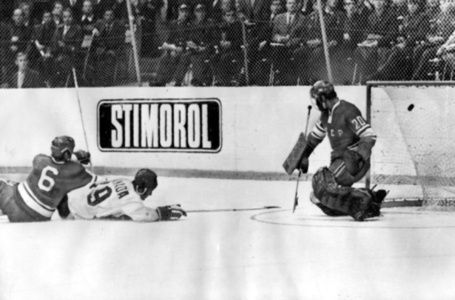 @zanstorm on Aug 31, 2012, 12:00p 48 Tweet Share (2) Pin The Canadian players and fans alike all had the same feeling. That we were better at hockey than the Russians. That we were gonna "wipe the floor" with them. That they didn't have a chance against a super NHL-laden roster. This was the first time any Russian team had played a group from Canada that was this talented. It was the first time they played NHL players. Usually Canada sent amateurs to any international hockey events. The Russians stated before the series started that they were a bit scared. They saw the size of some of the Canadian players, but they were more fearful of getting their butts handed to them in an 8-game series. Keep in mind that all 8 games were going to be played no matter what. The Russians knew how good the Canadian players were. They heard the stories. We were legends, and here they are coming all the way over here, most of them for the first time ever, to play a series against these giant skilled players. What transpired was absolutely unpredictable. History was about to be made. A nation that was quite divided at the time was about to come together for a hockey series. The Soviet team and it's attention to detail and skill was about to surprise everyone, to the point of Canadian fans booing their own players with our hockey supremacy pushed to the brink of defeat. So what is the greatest sports event in Canadian (and arguably even hockey) history? Sidney Crosby's golden goal in Vancouver at the 2010 Winter Olympics? Последний раз редактировалось Chugunka; 16.06.2021 в 06:06.
|
|
#67
10.05.2016, 10:18
|
||||
|
||||

|
|
#68
11.05.2016, 12:26
|
||||
|
||||

|
|
#69
11.05.2016, 12:27
|
||||
|
||||
 Paul Henderson and Bobby Clarke (left) of Team Canada celebrate Henderson's series-winning goal in Game 8 of the 1972 Summit Series between Canada and the ...
|
|
#70
12.05.2016, 10:32
|
||||
|
||||
|
How Vancouver's Surly Fans Helped Win the '72 Summit
http://thetyee.ca/Life/2012/09/08/1972-Summit-Series/
And key people who propelled the drama. By Steve Burgess, 8 Sep 2012, TheTyee.ca Share article via email Print this article 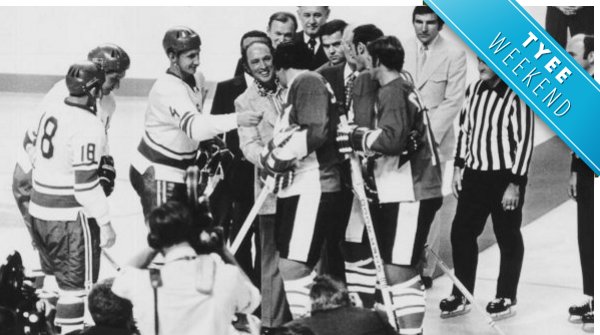 PM Pierre Trudeau was all smiles officiating the opening face-off for Game One of the 1972 Summit Series between the Soviet Union and Canada in Toronto. By Game Four in Vancouver, the mood was grim. Related The Millionaire Forgotten By the Stanley Cup Honour Ken Mallen, whose name was left off the coveted trophy 96 years ago. Opera on Ice Writing the book on Hockey: A People's History. Vancouver's Forgotten Track Star Shy Percy Williams shocked the world winning two Olympic golds and put Vancouver on the map. With archival photo essay. Take pride, Vancouver. You played a key role in Canadian hockey's finest hour. Today, Sept. 8, marks the 40th anniversary of Game Four in the epic 1972 Summit Series, played at the Pacific Coliseum. For Team Canada, Vancouver would prove to be the low point. The booing began during Team Canada's pre-game warm-ups, while Soviet players were cheered during introductions. The game ended in a decisive 5-3 Soviet win as Team Canada fell behind in the series, 1-2-1, heading into the four Russian games. Our Canadian heroes were booed off the Coliseum ice. And that upset Phil Esposito. "Every one of us guys, 35 guys that came out and played for Team Canada, we did it because we love our country, and not for any other reason," Esposito told the TV audience as he stood on the ice that night. "They can throw the money for the pension fund out the window.... We came because we love Canada... and I don't think it's fair that we should be booed." It's often claimed that Espo's televised outburst was the turning point. Just like we planned it, Vancouver. In some ways it's an odd choice for a national defining moment. Unlike America's feel-good Miracle on Ice in 1980, the 1972 Canada-Soviet Summit Series was not a David vs. Goliath story -- unless you cast Canada in the role of Goliath. Our hockey establishment was indeed smug, swaggering and overconfident until those stones started flying. The basic facts are practically tattooed on our national coat of arms: Early shocks, desperate times, the string of must-win victories back in Russia, and finally Paul Henderson's joyous leap with 34 seconds left in the eighth and final game. Goliath, bloody but unbowed, had come through. Some players and people who made up the drama: Tretiak Scouting can be a tough business. In 1962 a Decca Records talent scout declined to sign a Liverpool group, remarking, "The Beatles have no future in show business." Ten years later, just days before the opening of the Summit Series, Toronto Maple Leafs head scout Bob Armstrong was quoted after watching a Soviet team practice: "We saw Vladimir Tretiak -- their No. 1 goalie -- and he didn't look particularly good." The 1972 remark may tell you more about the future of the Leafs than it did about Tretiak. But in fairness, Tretiak was somewhat distracted that day. He'd gotten married the day before. "Two days later I was back in training and a day after that the team left for Canada," Tretiak said afterwards. "I tell people I spent my honeymoon with Canadian hockey players." The Summit Series would make Tretiak arguably the most famous goalie never to play in the NHL -- the first non-NHL player to be inducted into the Hockey Hall of Fame. The Cassandras The overconfidence of the Canadians has become legendary. A Canadian Press story from Aug. 24, 1972 was given the headline Scouts Suggest Eight Game Sweep in the Simcoe Reformer. But there were Cassandras out there. Montreal Star sports columnist John Robertson promised that if the Canadians somehow prevailed, he would eat his column. In an eerily prescient interview, former Canadian national team player Herb Pinder warned of what was coming. "The Russians will have an edge in conditioning no matter how hard Sinden works his players," Pinder told the Canadian Press in August 1972. "We just aren't prepared to pay the price to get in shape like the Russians.... They shoot hard and they don't waste shots.... They can hit, they are big and they are in better condition." "You could see the refereeing so bad that they (the Canadians) pull out and come home. People don't know how bad it can get." They found out. Team Canada's J.P. Parise became so incensed with German referee Josef Kompalla he threatened to decapitate the ref with his stick. As for Robertson, his warnings had essentially been proven right. But a promise is a promise. At a Montreal restaurant not long after the series ended, he choked down a bowl of shredded newsprint. Not by itself, of course -- the column was served up with tasty Russian dressing. The Missing In 1997 The Hockey News compiled a list of hockey's all-time greatest players. Three of the Hockey News top ten -- Bobby Orr, Gordie Howe and Bobby Hull -- were active at the time of the Summit Series. None played in it. Orr was listed on the roster but had just had knee surgery. Hull was named to the team by coach Harry Sinden but had committed the unpardonable sin of defecting to the upstart World Hockey Association. He was blackballed by tournament organizers, in spite of a direct plea from Prime Minister Pierre Trudeau. Hull and Howe, who had also gone to the new league, would get their chance two years later when the WHA staged its own version of the Summit Series. Lacking the same sort of supporting cast, the WHA all-stars were beaten soundly, 4-1-3 -- despite the presence of 1972 hero Paul Henderson, who had since joined the new league. Hull did prove himself against the Soviets, leading the series in scoring with seven goals. Howe scored three. Not bad, considering he was 46 years old at the time. The Posterized Boy In the NBA they call it "being posterized." Every bedroom wall poster of a monster dunk co-stars some unfortunate defender standing flat-footed, or perhaps leaping ineffectually as the ball slams through the hoop. Superstar vs. stooge, in a frozen image that never changes. So pity poor Yuri Liapkin -- posterized on the most famous goal in Canadian hockey history. By 1972 Liapkin was established as a great defenseman for Soviet league teams Khimik Voskresensk -- he would later join Spartak Moscow. He was the national team's highest-scoring defenseman. It's no wonder #25 was out there for the final crucial seconds of Game Eight along with #6, Moscow Dynamo defenseman Valery Vasiliev. After Henderson's first wild swing at the puck that carried him behind the net, the puck ricocheted off the side boards toward Vasiliev, who could not corral it. The puck then seemed to carom off Liapkin, positioned just beside Vasiliev. Henderson, back on his feet, grabbed the loose puck and swung around a diving Tretiak to deposit the winner. 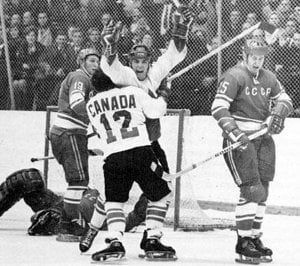 Skating forlornly behind a jubilant Paul Henderson, Yuri Liapkin ponders, perhaps, his impending posterization. It is hard to watch that video and pin the blame solely on Liapkin. Yet in that iconic photograph, as familiar to Canadian boomers as the flag, there is a despondent Liapkin skating just behind the jubilant Henderson. Mercifully for the Russian he was cropped out of the photo that graced most Canadian front pages the next day (near-identical versions were shot by photographers Frank Lennon of the Toronto Star and Montreal Canadiens team photographer Denis Brodeur, father of Martin Brodeur). But fairly or not he is still cast as the goat. "It turned out to be my worst nightmare," Liapkin later said. "Now all these years later everyone knows Henderson scored when Yuri Liapkin gave up the puck." The (Larger) Turning Point At the start of the 72-73 season NHL rosters featured three Swedes: Juha Widing, who had played his junior hockey with the Brandon Wheat Kings; Bobby Nystrom, who had moved to Canada with his family at age four; and Thommie Bergman. The Bruins' Ken Hodge had been born in England and Ranger Walt Tkaczuk in Germany. That was it for Europeans. Ten years later Europeans would make up slightly more than 10 per cent of NHL rosters. 1982 was also the year that a Soviet player first took the ice in an NHL game: Viktor Netchaev played three for the Los Angeles Kings. (He had married an American.) Not until the defection of Alexander Mogilny before the 1989/90 season would a Soviet-trained player really star in the NHL. Eventually Mogilny would make his way to the Vancouver Canucks, joining superstar Pavel Bure in 1995. It made sense. After all, Vancouver fans started cheering for Russians early. [Tyee] Последний раз редактировалось Chugunka; 17.06.2021 в 06:31.
|
 |
| Здесь присутствуют: 1 (пользователей: 0 , гостей: 1) | |
|
|


 Линейный вид

